Sayak Textile

How to Choose the Right Knitted Fabric for T-Shirts, Leggings and Sportswear

Choosing the right fabric is one of the most important decisions in garment manufacturing. The quality, comfort, durability, stretch, and appearance of a finished garment largely depend on the fabric selected for production. Whether you manufacture everyday T-shirts, leggings, sportswear, casual clothing, or premium apparel, understanding different types of knitted fabrics can help you make better sourcing decisions.

Knitted fabrics are widely used in the apparel industry because of their flexibility, softness, and versatility. However, every fabric has different characteristics, making it important to select the right material according to the garment’s intended use.

In this guide, we will explore popular knitted fabric types, their applications, and the key factors garment manufacturers should consider before purchasing fabric in bulk.

What Is Knitted Fabric?

Knitted fabric is a textile material created by interlocking loops of yarn. Unlike woven fabrics, which are produced by interlacing yarns at right angles, knitted fabrics generally offer greater flexibility and stretch, depending on their construction and fibre composition.

These properties make knitted fabrics suitable for a wide range of clothing applications, including T-shirts, leggings, innerwear, sweatshirts, joggers, sportswear and children’s garments.

The final performance of knitted fabric depends on factors such as yarn quality, knitting structure, fibre composition, fabric weight and finishing processes.

Different Types of Knitted Fabrics and Their Uses

Understanding the differences between knitted fabrics helps manufacturers select materials that match their product requirements, target customers and production budgets.

1. Single Jersey Fabric for T-Shirts

Single jersey fabric is a popular choice for manufacturing everyday T-shirts, casual tops, and lightweight garments. It typically features a smooth front surface and a slightly textured back.

Its lightweight construction and comfortable feel make it suitable for everyday apparel, promotional T-shirts, and a variety of casual clothing products.

Common applications:

  • Casual and regular-fit T-shirts

  • Lightweight tops and summer clothing

  • Printed T-shirts and promotional apparel

  • Everyday fashion garments

When sourcing single jersey fabric, consider its composition, GSM, surface appearance, and shrinkage behaviour to ensure it meets your production requirements.

2. Lycra Fabric for Stretchable Garments

Lycra fabric incorporates elastane into the fabric construction to provide stretch and flexibility. Depending on the blend and knitting structure, it can help garments maintain a closer fit while allowing comfortable movement.

It is frequently used for fitted clothing and apparel that requires additional elasticity.

Common applications:

  • Leggings and stretch trousers

  • Fitted T-shirts and tops

  • Activewear and athleisure

  • Stretchable fashion garments

When selecting Lycra fabric, check the fibre composition, stretch and recovery, fabric weight, and suitability for the intended garment.

3. Interlock Fabric for Smooth and Comfortable Apparel

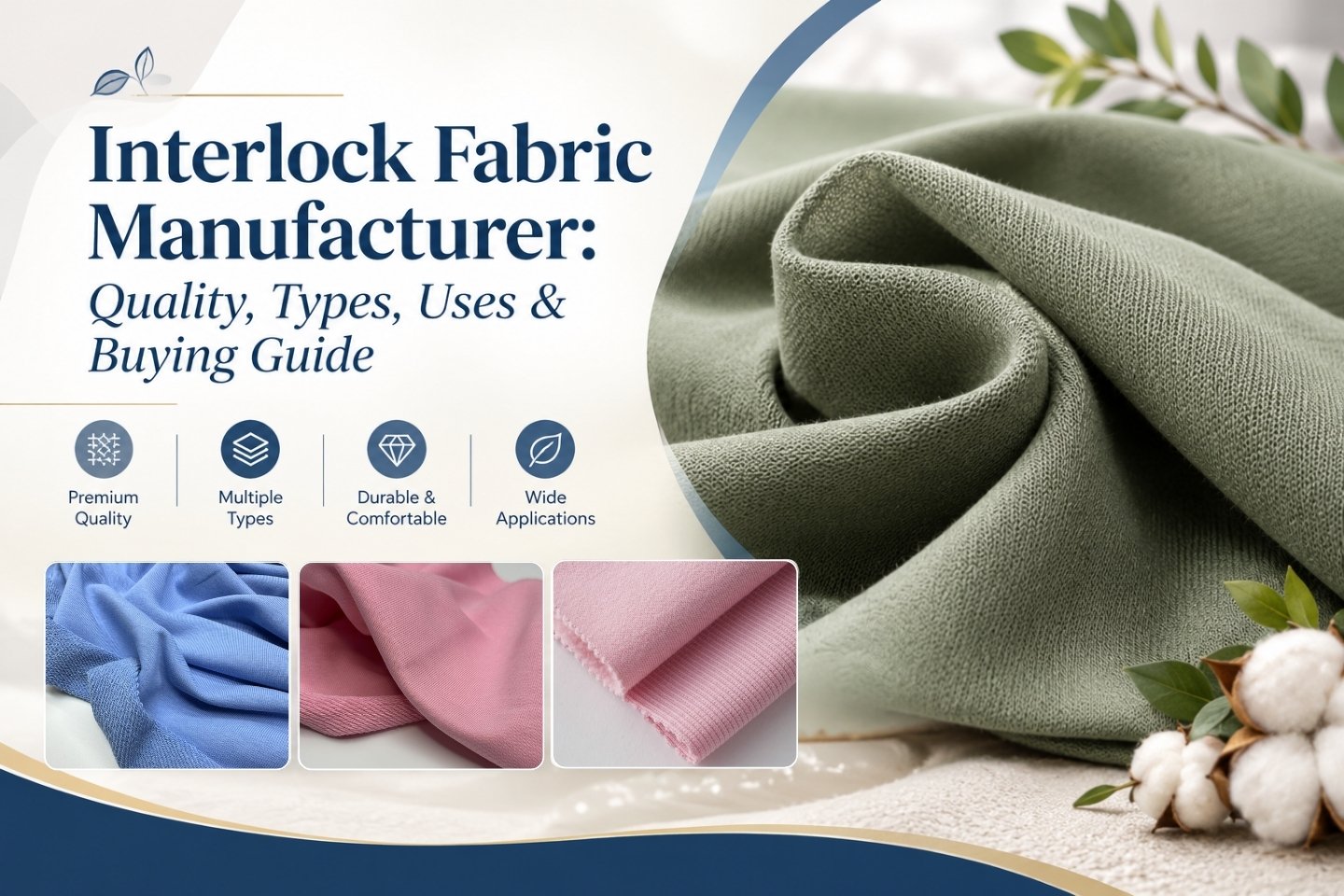
Interlock fabric is a type of double-knit fabric known for its relatively smooth surfaces and stable construction. Compared with many lightweight single jersey fabrics, it often provides a fuller feel and a more structured appearance.

Its characteristics make it a useful option for garments that require a comfortable finish and a consistent surface.

Common applications:

  • Premium T-shirts

  • Children’s clothing

  • Casual tops and everyday apparel

  • Selected sportswear and fitted garments

The appropriate interlock specification depends on the desired thickness, softness, stretch, and end use.

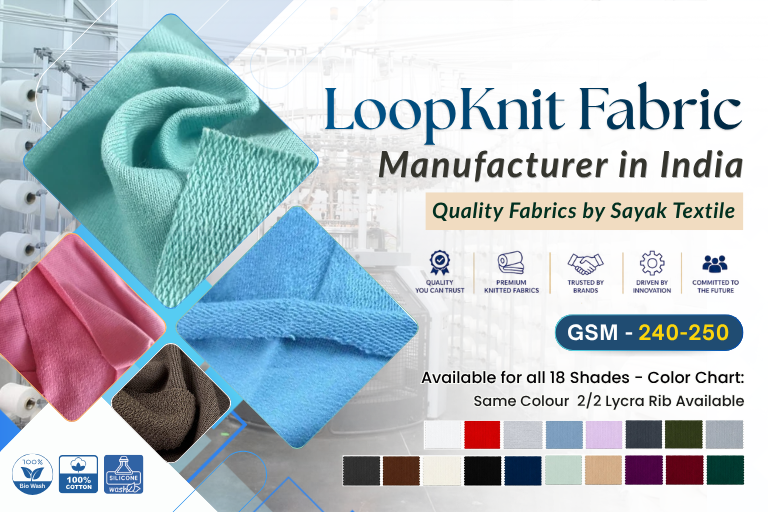
4. LoopKnit Fabric for Casualwear and Sweatshirts

LoopKnit fabric is valued for its distinctive looped construction and suitability for a range of casual and comfortable garments. Depending on its specific construction and weight, it can be considered for products that require a textured interior or a fuller fabric feel.

Garment manufacturers should assess the construction and finishing of the material before finalising a fabric specification.

Common applications:

  • Sweatshirts and casualwear

  • Joggers and selected loungewear

  • Hoodies, depending on fabric construction

  • Fashion and comfort-focused apparel

For bulk production, verify the fabric’s GSM, composition, surface quality, and performance after washing.

5. Sinker Fabric for Everyday Hosiery Garments

Sinker fabric is used in various hosiery and knitted apparel applications. Its suitability depends on the yarn, machine specifications, and resulting fabric characteristics.

It can be considered by garment manufacturers producing everyday clothing and other hosiery products.

Common applications:

  • Selected T-shirt styles

  • Vests and innerwear

  • Everyday knitted garments

  • Other hosiery apparel applications

Before ordering, discuss the required construction, fabric weight, width, and finish with your fabric supplier.

6. Lycra Rib Fabric for Necklines, Cuffs and Fitted Clothing

Rib fabrics feature a distinctive ribbed structure that can provide useful crosswise stretch. When made with Lycra or another elastane fibre, they can offer additional elasticity and recovery.

Rib fabrics are commonly selected for garment components and clothing styles that require a close fit.

Common applications:

  • T-shirt neckbands

  • Sleeve cuffs and garment hems

  • Stretch tops and fitted apparel

  • Waistbands and other selected garment components

The right rib construction depends on the desired stretch, recovery, rib pattern, and finished garment design.

7. Fleece Fabric for Warm and Comfortable Clothing

Fleece fabric is often selected for garments intended to provide additional warmth and a soft feel. Its properties vary according to the fibre composition, knitting construction and finishing process.

It is particularly relevant for manufacturers developing winterwear and heavier casual clothing.

Common applications:

  • Sweatshirts and hoodies

  • Winter casualwear

  • Warm joggers and lounge clothing

  • Other cold-weather apparel

When purchasing fleece fabric, evaluate its weight, surface finish, softness, and resistance to unwanted pilling.
How to Choose the Right Knitted Fabric for Your Garment

Selecting fabric involves more than comparing prices. A suitable material should meet the garment’s functional requirements while maintaining consistent quality during production.

1. Identify the End Use

Begin by deciding what you intend to manufacture. Everyday T-shirts may require a lightweight and comfortable fabric, whereas leggings generally need appropriate stretch and recovery. Sweatshirts and winter garments may require a heavier construction.

The intended use should guide every subsequent sourcing decision.

2. Check GSM and Fabric Weight

GSM stands for grams per square metre and indicates the weight of a fabric per unit area.

A lower GSM fabric is generally lighter, while a higher GSM fabric is generally heavier. However, GSM alone does not determine quality, durability, or comfort.

Always choose fabric weight according to the garment design, climate, desired drape, and performance requirements.

3. Evaluate Fibre Composition

Fabric composition affects softness, breathability, elasticity, durability and care requirements.

Cotton-rich fabrics are often selected for their familiar, comfortable feel. Polyester blends can be useful where their specific performance characteristics are required, while elastane-containing fabrics are suitable for applications that need additional stretch.

The right composition depends on the garment and the intended customer experience.

4. Test Stretch and Recovery

For leggings, fitted tops and other stretch garments, check how the fabric behaves when stretched and whether it returns towards its original shape.

Good stretch recovery helps the finished garment maintain its intended fit. Request samples and test them before committing to a large production order.

5. Check Colour Consistency and Finishing

Fabric appearance is important for maintaining consistency across a clothing collection. Check the colour, surface texture, finish and visible defects before approving a batch.

For dyed fabrics, ask about colourfastness and any relevant testing, particularly when consistent shades are important to your brand.

6. Consider Shrinkage and Pilling

Shrinkage can affect garment dimensions after washing, while pilling can change the appearance of a garment during use.

Where these factors matter, request suitable test information or assess a sample after washing and handling. Establish acceptable quality parameters before bulk production begins.

7. Compare Overall Value, Not Just Price

A low purchase price may not always provide the best value if the material does not meet your requirements or creates avoidable production issues.

Compare specifications, sample quality, consistency, minimum order quantities, lead times and delivery terms when evaluating fabric suppliers.

Why Choosing the Right Fabric Supplier Matters

A dependable fabric supplier can make the sourcing process more straightforward for garment manufacturers, clothing brands and wholesalers.

When evaluating a supplier, consider the following:

  • Product range: Access to fabric varieties suited to different garment categories.

  • Consistent specifications: Clear information about composition, GSM, width and finish.

  • Quality checks: Appropriate inspection and testing processes.

  • Customisation options: Availability of suitable specifications according to production needs.

  • Reliable communication: Clear quotations, order updates and delivery expectations.

  • Long-term support: A supplier relationship that can accommodate repeat orders and changing requirements.

Discussing your requirements in advance helps both parties establish realistic product specifications and expectations.

Source Knitted Fabrics from Sayak Textile

Sayak Textile is a knitted hosiery fabric manufacturer and supplier based in Kolkata, West Bengal. The company offers a range of fabrics for garment and apparel manufacturing, including Single Jersey, Lycra, Sinker, Interlock, LoopKnit, Lycra Rib, Fleece and other knitted fabric varieties.

Whether you are sourcing materials for T-shirts, leggings, casualwear or other hosiery garments, identifying the right fabric specification is an important first step.

At Sayak Textile, we aim to support garment manufacturers and apparel businesses with fabric solutions suited to their requirements.

Explore our product range to identify suitable materials for your next manufacturing project.

Looking for a knitted fabric supplier in Kolkata?

Contact Sayak Textile to discuss your fabric requirements, specifications and bulk purchasing needs.

Visit our website: https://sayaktextile.co.in/

Conclusion

Choosing the right knitted fabric is essential for producing garments that meet expectations for comfort, appearance, fit, and durability. From single jersey for everyday T-shirts to Lycra fabric for stretch garments and fleece for warm clothing, every material should be selected according to its intended application.

By evaluating fabric construction, GSM, composition, finishing, and sample performance, garment manufacturers can make more informed sourcing decisions.

For knitted hosiery fabric requirements, connect with Sayak Textile to explore suitable fabric options for your next apparel collection.

What People Mostly Asked?

Which knitted fabric is best for T-shirts?

Single jersey is a common choice for everyday T-shirts because of its lightweight construction and comfortable feel. Interlock and other knitted fabrics may also be suitable depending on the desired thickness, structure, and finish.


Which fabric is suitable for leggings?

Lycra-containing knitted fabrics are often considered for leggings because they can provide stretch and recovery. The appropriate composition, construction, and GSM depend on the fit and performance required.

What is the difference between single jersey and interlock fabric?

Single jersey is generally a single-knit construction with a smooth front and a textured back. Interlock is a double-knit construction that typically provides a smoother surface on both sides and a fuller feel.

What does GSM mean in knitted fabric?

GSM means grams per square metre. It measures fabric weight per unit area and helps buyers compare material specifications. A higher GSM does not automatically mean better quality.

What should I check before ordering knitted fabric in bulk?

Check the fabric composition, GSM, width, colour, stretch and recovery where relevant, finishing, shrinkage behaviour, sample quality, order quantity and delivery terms.

Where can I find a knitted fabric manufacturer in Kolkata?

Sayak Textile is based in Kolkata, West Bengal, and offers a range of knitted hosiery fabrics for apparel manufacturing. Visit https://sayaktextile.co.in/ to explore its product range and enquire about your requirements.

Share on:

See Recent Blog