Sayak Textile

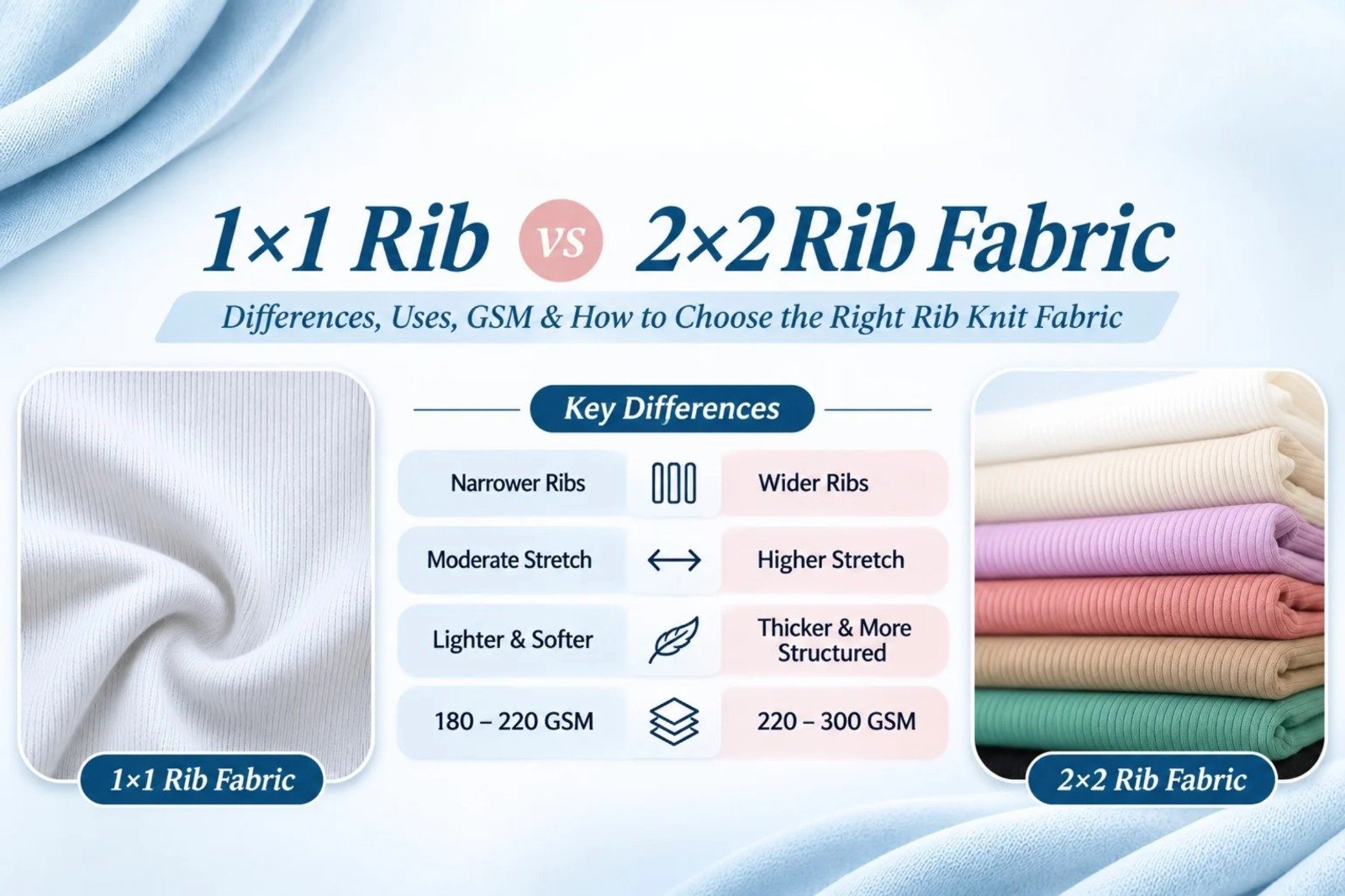
1x1 Rib vs 2x2 Rib Fabric: Differences, Uses, GSM & How to Choose the Right Rib Knit Fabric

1×1 Rib vs 2×2 Rib Fabric

Choosing the right knitted fabric is essential for producing comfortable, durable, and well-fitted garments. In the garment manufacturing industry, rib knit fabric plays an important role in improving stretchability, flexibility, fit, and overall garment finishing.

Among the most popular varieties, 1×1 Rib Fabric and 2×2 Rib Fabric are widely used by clothing manufacturers, fashion brands, wholesalers, and apparel businesses. Both fabrics offer excellent flexibility and are suitable for different garment applications. However, their knitting structures, appearance, thickness, and performance can vary depending on yarn composition and manufacturing specifications.

Understanding the difference between 1×1 rib and 2×2 rib fabric helps manufacturers choose the right material for their production needs.

In this guide, we explain their differences, manufacturing characteristics, common applications, GSM considerations, and key factors when sourcing quality rib knit fabric from a reliable manufacturer in India.

What Is Rib Knit Fabric?

Rib knit fabric is a type of knitted textile manufactured using alternating knit and purl columns, creating distinctive vertical ridges on its surface. This knitting structure provides excellent widthwise stretch, flexibility, and shape recovery.

Unlike regular single jersey fabric, rib knit fabric offers greater elasticity, making it suitable for garments that require a comfortable fit and flexible finishing.

Rib fabric is commonly used in:

  • T-shirt neckbands and collars

  • Sweatshirt and hoodie cuffs

  • Joggers and track pants waistbands

  • Leggings and fitted garments

  • Innerwear and undergarments

  • Kidswear and baby clothing

  • Fashion tops and casualwear

Depending on the garment requirements, manufacturers can choose different rib structures, including 1×1 rib and 2×2 rib.

What Is 1x1 Rib Fabric?

1×1 rib fabric is a knitted fabric structure in which one knit column alternates with one purl column. This creates a fine, uniform ribbed appearance with excellent flexibility.

It is widely preferred for garments that require a clean finish, comfortable stretch, and a relatively fine rib texture.

Key Features of 1×1 Rib Fabric

  • Fine and uniform ribbed texture

  • Excellent widthwise stretch

  • Comfortable and flexible construction

  • Suitable for fitted garment applications

  • Available in different yarn compositions

  • Can be manufactured with Lycra for improved stretch and recovery

Common Uses of 1×1 Rib Fabric

1×1 rib fabric is commonly used in T-shirt neckbands, lightweight garment finishing, fitted tops, innerwear, babywear, and other apparel products.

For manufacturers producing comfortable everyday clothing, 1×1 Lycra rib fabric can be an excellent choice depending on the required stretch and recovery.

What Is 2x2 Rib Fabric?

2×2 rib fabric is produced using two knit columns followed by two purl columns. This creates a more pronounced ribbed texture compared to the finer appearance of 1×1 rib.

It is commonly selected for garments where a more visible rib pattern and fuller texture are desired.

Key Features of 2×2 Rib Fabric

  • Distinctive and wider ribbed appearance

  • Textured surface finish

  • Flexible knitted construction

  • Suitable for different garment applications

  • Can be produced using cotton and Lycra blends

  • Available in different specifications depending on production requirements

Common Uses of 2×2 Rib Fabric

2×2 rib fabric is suitable for sweatshirt cuffs, hoodie finishing, waistbands, fitted tops, fashion garments, and other knitted apparel.

Its distinctive rib pattern makes it a popular choice for manufacturers looking to achieve a more prominent ribbed appearance.

1x1 Rib vs 2x2 Rib Fabric: What Is the Difference?

Although both fabrics belong to the rib knit category, their knitting structures create noticeable differences in appearance and garment applications.

Here is a comparison to help garment manufacturers understand which fabric may be more suitable for their production requirements.

Comparison Factor1×1 Rib Fabric2×2 Rib Fabric
Knitting Structure1 knit + 1 purl2 knit + 2 purl
AppearanceFine ribbed textureWider ribbed texture
Surface PatternClosely spaced ribsMore prominent ribs
StretchabilityDepends on yarn and constructionDepends on yarn and construction
ApplicationsNeckbands, fitted tops, innerwearCuffs, waistbands, fashion garments
Fabric SelectionFine and uniform appearance

More pronounced ribbed appearance

Which one should you choose?

Choose 1×1 rib when your garment requires a finer rib structure and a clean finishing appearance.

Choose 2×2 rib when you prefer wider, more noticeable rib patterns and a different textured appearance.

However, the actual stretch, recovery, thickness, and performance depend on yarn composition, knitting parameters, GSM, and finishing processes. Always evaluate the actual fabric sample before bulk production.

What Is the Ideal GSM for Rib Knit Fabric?

GSM stands for Grams per Square Meter. It indicates the weight of a fabric per square metre and is an important specification in garment manufacturing.

Selecting the appropriate GSM helps manufacturers achieve the desired garment thickness, comfort, flexibility, and appearance.

The required GSM for rib fabric depends on:

  • Type of garment being manufactured

  • Yarn composition

  • Knitting structure

  • Required thickness and texture

  • Stretch and recovery requirements

  • End-use application

For example, lightweight garment finishing may require a different fabric weight compared to heavier sweatshirt cuffs or waistbands.

There is no single ideal GSM for every 1×1 rib or 2×2 rib fabric. Manufacturers should confirm the required GSM and test the fabric sample before finalising their production order.

Which Yarn Composition Is Best for Rib Fabric?

Yarn composition plays an important role in determining fabric softness, flexibility, durability, and stretch recovery.

Some commonly used compositions include:

1. Cotton Rib Fabric

Cotton rib fabric is known for its natural softness, breathability, and comfortable feel. It is suitable for everyday clothing, innerwear, and kidswear.

2. Cotton Lycra Rib Fabric

Cotton Lycra rib fabric combines the softness of cotton with additional stretch and flexibility from elastane.

It is commonly used for fitted garments, leggings, neckbands, cuffs, and other apparel applications where stretch and recovery are important.

3. Polyester Blend Rib Fabric

Polyester blend rib fabrics can offer durability, dimensional stability, and practical performance depending on the yarn blend and finishing.

They can be considered for selected casualwear, sportswear, and other garment applications.

The best composition depends on the garment design, required performance, target market, and manufacturing specifications.

How to Choose the Right Rib Fabric for Garment Manufacturing?

Before purchasing rib knit fabric in bulk, garment manufacturers should evaluate several important factors.

1. Identify the End Use

First, determine whether the fabric will be used for T-shirt neckbands, hoodie cuffs, waistbands, leggings, or complete garments.

Different applications require different fabric characteristics.

2. Check Fabric GSM

Always confirm the required GSM according to the garment design and desired thickness.

3. Evaluate Stretch and Recovery

A good rib fabric should provide suitable stretch and return to its original dimensions after being stretched.

This is particularly important for neckbands, cuffs, and waistbands.

4. Check Fabric Composition

Choose an appropriate cotton, polyester, or Lycra blend according to the garment’s performance requirements.

5. Verify Colour Consistency

Colour consistency is important when matching rib fabric with the main garment fabric. Always approve the colour sample before bulk production.

6. Select a Reliable Fabric Manufacturer

Working with an experienced rib fabric manufacturer helps ensure consistent quality, suitable specifications, and dependable supply for garment production.

Why Choose Sayak Textile for Premium Rib Knit Fabric?

When it comes to sourcing quality knitted fabrics for garment manufacturing, choosing the right manufacturer makes a significant difference.

Sayak Textile is an established hosiery knitted fabric manufacturer and supplier based in Kolkata, West Bengal, India.

With extensive textile industry experience, we focus on manufacturing and supplying quality knitted fabrics designed for different garment applications.

Our product portfolio includes:

  • Lycra Rib 1×1 Fabric

  • Lycra Rib 2×2 Fabric

  • Sinker Fabric

  • Interlock Fabric

  • Single Jersey Fabric

  • Loop Knit Fabric

  • Fleece Fabric

  • Matty/Kulti Fabric

  • Reversible Fabric

We focus on quality, consistency, and customer requirements to support garment manufacturers, apparel brands, wholesalers, and textile businesses.

What People Mostly Asked?

What is the main difference between 1x1 rib and 2x2 rib fabric?

The primary difference is their knitting structure. 1×1 rib alternates one knit column with one purl column, whereas 2×2 rib alternates two knit columns with two purl columns. This creates different rib patterns and surface appearances.

Which is better, 1x1 rib or 2x2 rib?

Neither is universally better. 1×1 rib is suitable when a finer rib appearance is required, while 2×2 rib is preferred for wider and more prominent rib patterns. The choice depends on garment design and performance requirements.

Is Lycra rib fabric suitable for T-shirt neckbands?

Yes. Lycra rib fabric is commonly used for T-shirt neckbands because its stretch and recovery properties can help maintain a comfortable fit and proper neckline shape.

What is 1x1 Lycra rib fabric used for?

1×1 Lycra rib fabric is used in T-shirt neckbands, fitted garments, innerwear, babywear, cuffs, and other apparel applications requiring flexibility.

What is 2x2 rib fabric used for?

2×2 rib fabric is commonly used for sweatshirt cuffs, hoodie finishing, waistbands, fitted tops, and fashion garments.

What GSM is suitable for rib knit fabric?

The suitable GSM depends on the fabric construction, yarn composition, garment application, and required thickness. Manufacturers should confirm GSM through sample evaluation.

Can rib fabric be customized?

Yes. Fabric specifications such as GSM, width, colour, and fabric type can be discussed according to manufacturing requirements and production feasibility.

Where can I find a reliable rib fabric manufacturer in India?

Garment manufacturers and apparel businesses can contact Sayak Textile, a hosiery knitted fabric manufacturer and supplier based in Kolkata, West Bengal, for information about available rib fabric varieties and customized requirements.

Share on:

See Recent Blog