Sayak Textile

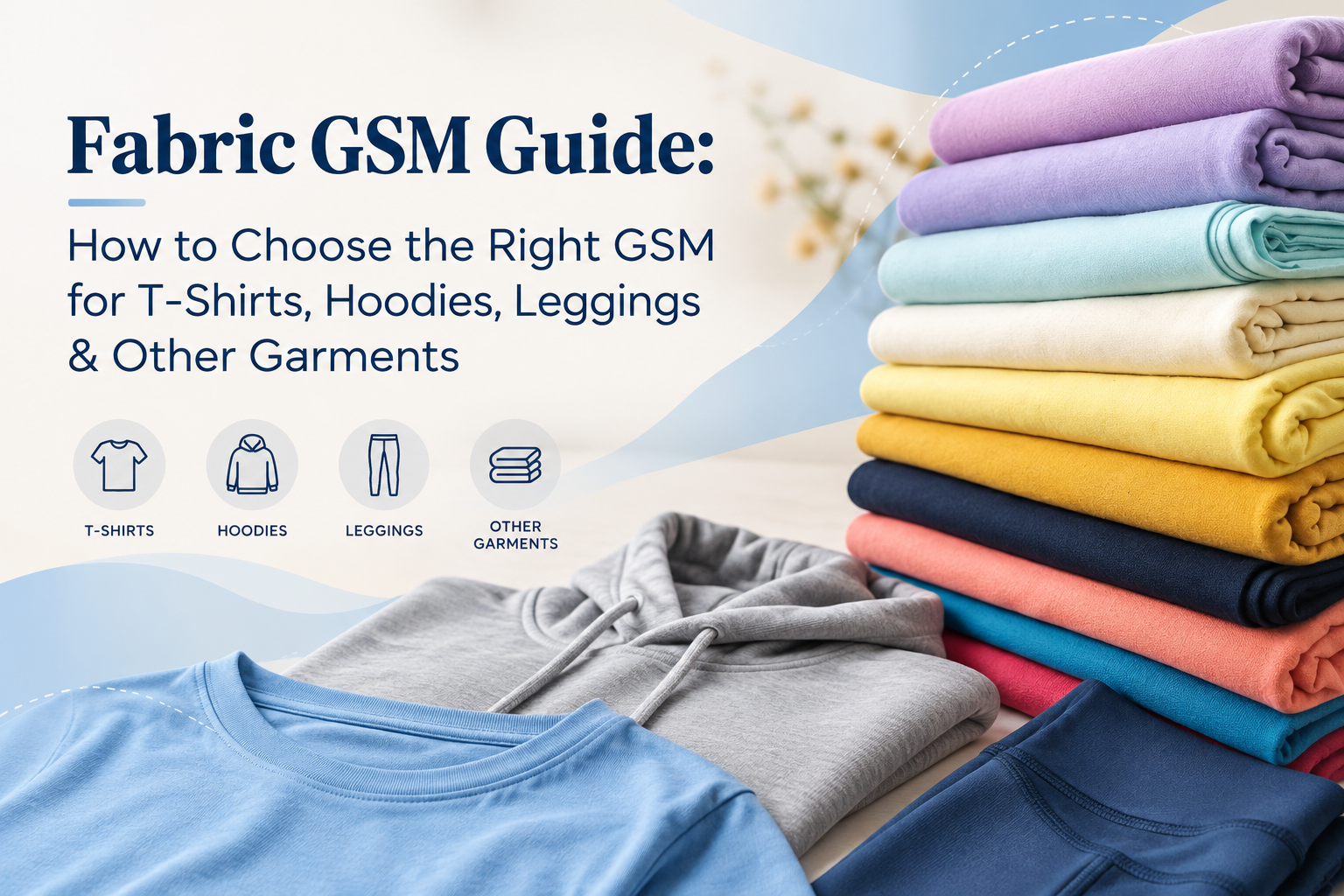
Fabric GSM Guide: How to Choose the Right GSM for T-Shirts, Hoodies, Leggings & Other Garments

Choosing the right fabric is one of the most important decisions in garment manufacturing. While fabric composition, texture, colour, and stretchability are essential factors, one specification that directly influences garment quality is GSM (Grams per Square Meter).

Whether you are manufacturing T-shirts, leggings, hoodies, sportswear, or premium casual clothing, understanding fabric GSM helps you select the right material for your product.

A higher GSM fabric is generally heavier, while a lower GSM fabric is generally lighter. However, higher GSM does not always mean better quality. The ideal fabric weight depends on the garment’s purpose, comfort requirements, season, and design.

In this complete fabric GSM guide, we will explain what GSM means, how it affects garment quality, and how to select the right GSM for different types of knitted fabrics.

What Is GSM in Fabric?

GSM stands for Grams per Square Meter. It is a standard measurement used in the textile industry to determine the weight of fabric per square meter.

For example, if a fabric has a GSM of 180, it means that one square meter of that fabric weighs approximately 180 grams.

GSM is widely used by textile manufacturers, garment exporters, clothing brands, and fabric suppliers to maintain consistency during fabric production and purchasing.

Understanding GSM helps buyers compare fabrics, estimate garment weight, and select suitable materials for different applications.

Why Is Fabric GSM Important?

Fabric GSM plays an important role in determining the overall characteristics of a garment.

Some of the key benefits of understanding GSM include:

  • Garment Comfort: Helps determine whether the fabric is suitable for lightweight or heavyweight clothing.

  • Fabric Thickness: Provides a useful indication of fabric weight and coverage.

  • Product Quality: Helps maintain consistency across garment production batches.

  • Seasonal Suitability: Supports the selection of fabrics for summer, winter, and all-season clothing.

  • Cost Estimation: Fabric weight can influence material consumption, shipping weight, and production costs.

However, GSM should always be evaluated alongside yarn quality, fabric construction, fibre composition, and finishing.

Understanding Different Fabric GSM Categories

Fabric GSM can generally be divided into three broad categories.

1. Lightweight Fabric

Lightweight fabrics typically have a GSM below 160.

These fabrics are suitable for garments that require breathability, flexibility, and a comfortable feel.

Common applications include:

  • Lightweight T-shirts

  • Summer tops

  • Innerwear

  • Lightweight casual garments

  • Certain sportswear applications

Lightweight fabrics are particularly useful for clothing designed for warm weather.

2. Medium-Weight Fabric

Medium-weight fabrics generally fall within the 160–240 GSM range.

These fabrics offer a balance between comfort, coverage, and durability. They are widely used in everyday apparel manufacturing.

Common applications include:

  • Regular T-shirts

  • Premium T-shirts

  • Casualwear

  • Leggings

  • Lightweight sweatshirts

  • Everyday knitted garments

This category is popular among clothing brands looking for versatile fabrics suitable for regular use.

3. Heavyweight Fabric

Heavyweight fabrics generally have a GSM above 240.

These fabrics provide greater fabric mass and are often selected for garments that require a substantial feel or additional coverage.

Common applications include:

  • Hoodies

  • Heavyweight sweatshirts

  • Winterwear

  • Premium oversized T-shirts

  • Structured casualwear

The actual suitability of a heavyweight fabric depends on its construction, composition, and intended garment application.

What Is the Best GSM for Different Types of Garments?

The ideal GSM varies depending on the garment type, fabric construction, and desired performance.

Here are some general GSM ranges used in knitted garment manufacturing.

Best GSM for T-Shirts

T-shirts are manufactured using different GSM ranges depending on their intended use.

Lightweight T-shirts generally use fabrics around 140–160 GSM, while regular everyday T-shirts commonly use fabrics around 160–200 GSM.

Premium and heavyweight T-shirts may use fabrics around 200–260 GSM or higher.

For garment manufacturers, selecting the correct GSM helps achieve the desired combination of comfort, appearance, and fabric coverage.

Cotton hosiery fabric, Single Jersey fabric, and Cotton Lycra fabric are commonly considered for different T-shirt applications.

Best GSM for Hoodies and Sweatshirts

Hoodies and sweatshirts generally require fabrics with greater weight and coverage than regular T-shirts.

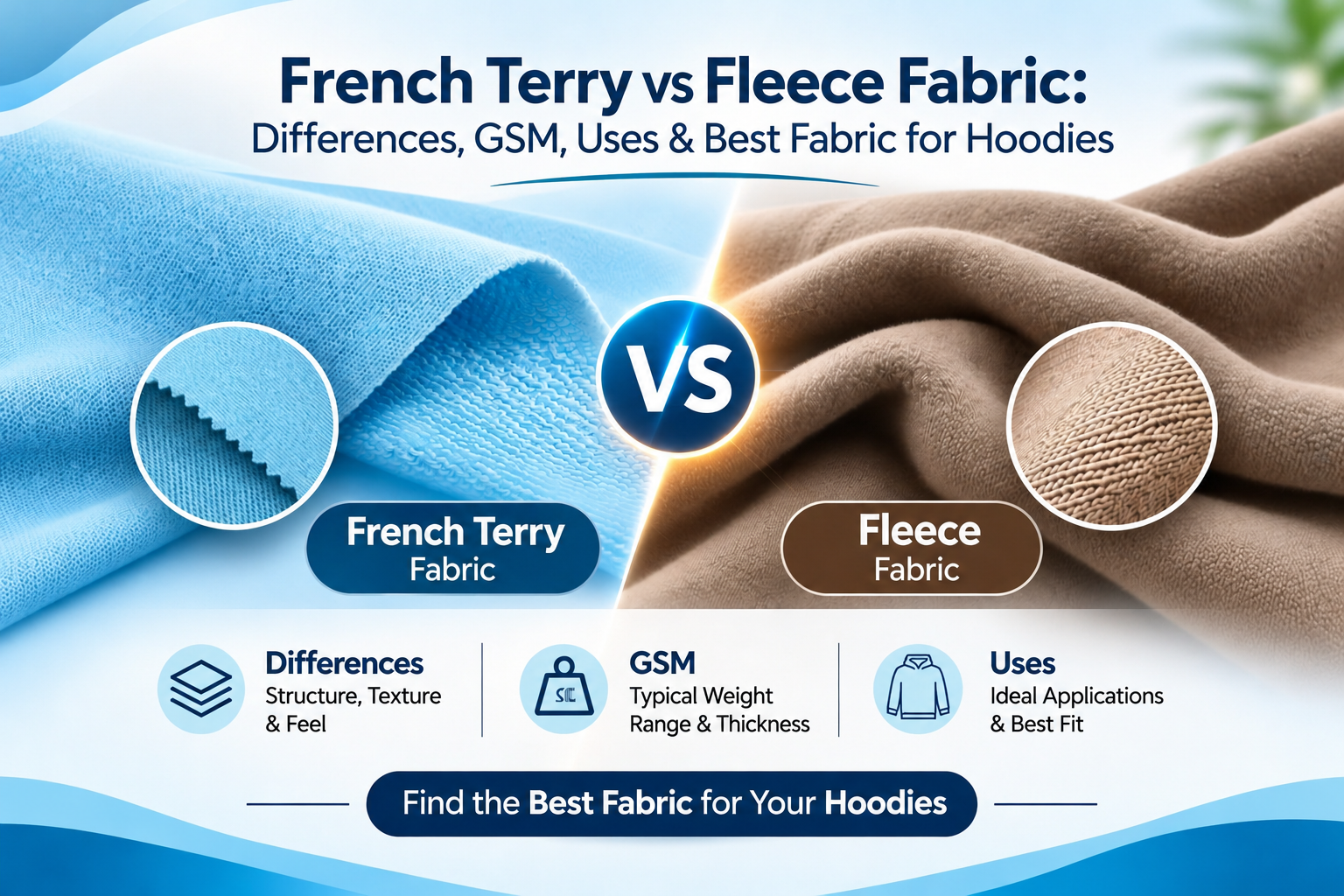
French Terry and Fleece fabrics are popular choices for these garments.

A general GSM selection guide includes:

  • Lightweight sweatshirts: 220–260 GSM

  • Regular hoodies: 260–320 GSM

  • Heavyweight hoodies: 320–400 GSM or higher

These ranges are indicative. The final GSM should be selected based on the garment design, climate, and desired fabric feel.

Best GSM for Leggings

Leggings require a combination of stretchability, flexibility, comfort, and coverage.

Cotton Lycra and other suitable stretch knitted fabrics are commonly used for leggings manufacturing.

A general GSM range of 180–250 GSM may be suitable for many leggings applications.

However, the correct GSM depends on the fabric composition, elastane percentage, knitting construction, and recovery properties.

For example, a fabric with good stretch and recovery may perform differently from a fabric of the same GSM with a different construction.

Best GSM for Sportswear

Sportswear requires fabrics that support movement, moisture management, and comfort.

The appropriate GSM depends on the type of sportswear.

Lightweight knitted fabrics may be suitable for running T-shirts, while medium-weight stretch fabrics may be preferred for training garments and leggings.

When selecting sportswear fabric, garment manufacturers should evaluate:

  • GSM

  • Stretchability

  • Moisture management

  • Breathability

  • Fabric recovery

  • Durability

GSM alone cannot determine whether a fabric is suitable for sportswear.

Fabric GSM vs Fabric Thickness: What Is the Difference?

Many fabric buyers assume that GSM and thickness are the same. However, these two characteristics are different.

GSM measures the weight of fabric per square meter, whereas thickness refers to the physical distance between the fabric’s surfaces.

Two fabrics can have the same GSM but different thicknesses.

For example, a compact knitted fabric may feel thinner than a brushed or fleece fabric with the same GSM.

Fabric construction, yarn characteristics, finishing, and fibre composition all influence the final thickness and feel.

This is why garment manufacturers should evaluate both GSM and fabric thickness when selecting materials.

How to Choose the Right Fabric GSM for Your Business?

Selecting the correct GSM is essential for maintaining garment quality and meeting customer expectations.

Here are some important factors to consider before purchasing knitted fabric.

1. Understand the Garment Application

Start by identifying the type of garment you want to manufacture.

A lightweight summer T-shirt requires a different fabric specification than a winter hoodie.

The intended use of the garment should guide your GSM selection.

2. Consider the Fabric Composition

Cotton, polyester, Lycra, and blended fabrics can have different characteristics even when they have the same GSM.

For example, Cotton Lycra fabric provides stretch and flexibility, while different cotton and polyester blends may offer different durability, moisture management, and comfort characteristics.

Always consider composition along with GSM.

3. Check Fabric Construction

Knitted fabrics such as Single Jersey, Interlock, Rib, French Terry, and Fleece have different structures.

These structures influence the fabric’s appearance, texture, thickness, stretchability, and performance.

Selecting the correct construction is just as important as selecting the correct GSM.

4. Evaluate Fabric Quality

Before finalising a fabric order, garment manufacturers should evaluate:

  • GSM consistency

  • Fabric width

  • Colour consistency

  • Shrinkage

  • Stretch and recovery

  • Surface quality

  • Finishing

These checks help reduce production issues and improve garment consistency.

5. Request Fabric Samples

Before placing a bulk order, it is advisable to evaluate fabric samples.

Samples allow buyers to assess the fabric’s actual feel, weight, colour, and suitability for their garment designs.

For bulk garment manufacturing, confirming the required GSM and fabric specifications in advance can help maintain consistency throughout production.

Why Fabric GSM Matters for Garment Manufacturers?

For garment manufacturers and clothing brands, GSM is more than just a technical measurement.

It helps establish product specifications, maintain consistency, and select the right material for different garment categories.

A fabric that is too lightweight may not provide the desired coverage, while a fabric that is too heavy may affect garment comfort and flexibility.

By understanding GSM and evaluating other fabric properties, manufacturers can make informed purchasing decisions and develop garments that meet their customers’ expectations.

Working with an experienced knitted fabric manufacturer can also help buyers identify suitable fabric options for their specific requirements.

Choose Quality Knitted Fabrics from Sayak Textile

At Sayak Textile, we understand the importance of fabric quality, consistency, and performance in garment manufacturing.

As a trusted hosiery knitted fabric manufacturer in Kolkata, West Bengal, we offer a wide range of knitted fabrics designed for different apparel applications.

Our product range includes:

  • Single Jersey Fabric

  • Interlock Fabric

  • Cotton Lycra Fabric

  • French Terry Fabric

  • LoopKnit Fabric

  • Lycra Rib Fabric

  • Sinker Fabric

  • Fleece Fabric

  • T-Shirt Fabric

  • Leggings Fabric

We focus on delivering quality knitted fabrics that support the requirements of garment manufacturers, apparel brands, and fabric buyers.

Whether you are looking for lightweight fabrics for summer clothing or heavier knitted fabrics for sweatshirts and winterwear, choosing the right fabric specification is essential for achieving the desired garment quality.

Looking for a reliable knitted fabric manufacturer in Kolkata?

Contact Sayak Textile to discuss your fabric requirements and explore suitable knitted fabric options for your business.

Conclusion

Understanding fabric GSM is essential for garment manufacturers, clothing brands, and textile buyers.

From lightweight T-shirts to heavyweight hoodies, the right GSM helps achieve the desired garment weight, coverage, and comfort.

However, GSM should always be considered alongside fabric composition, construction, stretchability, and finishing.

By selecting the right knitted fabric specifications and working with a reliable fabric manufacturer, businesses can improve product consistency and meet customer expectations.

Explore the knitted fabric range at Sayak Textile to find suitable materials for your garment manufacturing requirements.

What People Mostly Asked?

What does GSM mean in fabric?

GSM stands for Grams per Square Meter. It measures the weight of fabric per square meter and is commonly used to specify fabric weight in the textile industry.

What is a good GSM for T-shirts?

A GSM of approximately 160–200 is commonly used for regular T-shirts. Lightweight and heavyweight T-shirts may require different GSM ranges depending on the desired design and fabric feel.

Is higher GSM fabric better?

Not necessarily. Higher GSM generally indicates a heavier fabric, but the best GSM depends on the garment’s purpose, comfort, construction, and intended use.

What GSM is suitable for hoodies?

Hoodies commonly use fabrics around 260–320 GSM, although lightweight and heavyweight hoodie designs may require different specifications.

Does GSM affect fabric quality?

GSM affects fabric weight and can influence coverage and garment feel. However, overall fabric quality also depends on yarn quality, knitting construction, composition, finishing, and other performance characteristics.

How can I choose the right GSM for my garment business?

Consider the garment type, fabric composition, construction, comfort requirements, and intended use. Requesting fabric samples and checking the specifications before bulk purchasing can help you select the right material.

Share on:

See Recent Blog